To provide multiple means of representation, present each idea in more than one format: text, audio, video and visuals. For example, a concept explained aloud, shown in a diagram and written as a summary reaches far more learners than text alone.
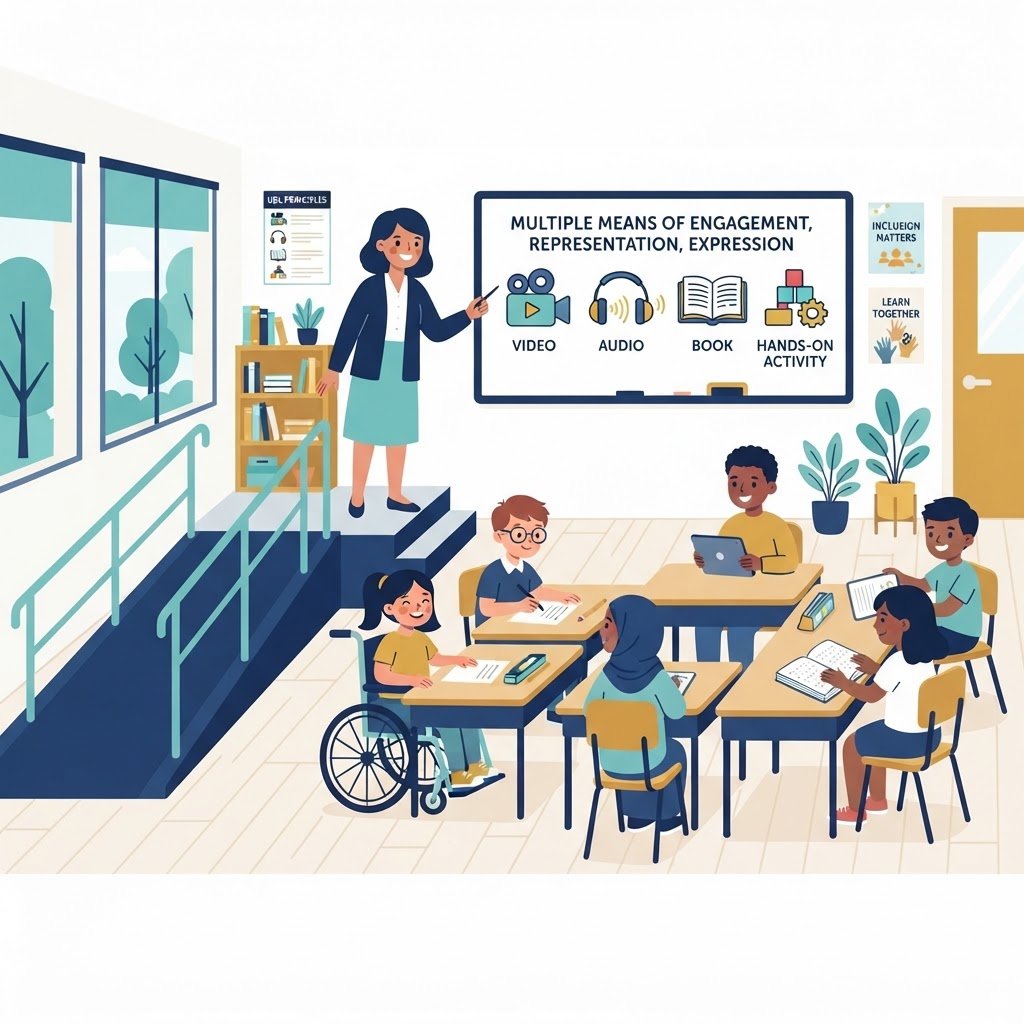
4. Provide Multiple Means of Representation
4.1 First, present content in multiple formats, including text, audio, video, and interactive media.
4.2 In addition, use visual supports, (for example, charts, mind maps, infographics) to reinforce learning.
4.3 Then highlight key information using bolding, color coding, and summaries.
4.4 Finally, provide alternative texts and captions for multimedia content. As a result, no learner is locked out of the same idea.
Means of Representation in a Real Lesson
Choose one idea from the week, then present it in text, audio and a diagram. For example, a Windows security rule can be read, heard and seen in a flowchart inside the same lesson. In addition, place the formats side by side, so students can switch without losing their place. As a result, the means of representation reach learners who would otherwise stall on text alone.
Keep the formats linked, not scattered. For example, embed the audio player beside the summary graphic, so a learner can move between them in one click. In addition, number each version, because updates stay traceable that way. As a result, the means of representation never strand a student mid-lesson.
External Resources
In conclusion, representation options remove the first barrier many learners face. Then, keep the formats linked, so a student can move between them without losing their place.