Multiple means of action and expression let students show what they know in the format that fits them best. For example, one student writes a report, another records a video and a third builds a project, while all demonstrate the same outcome.
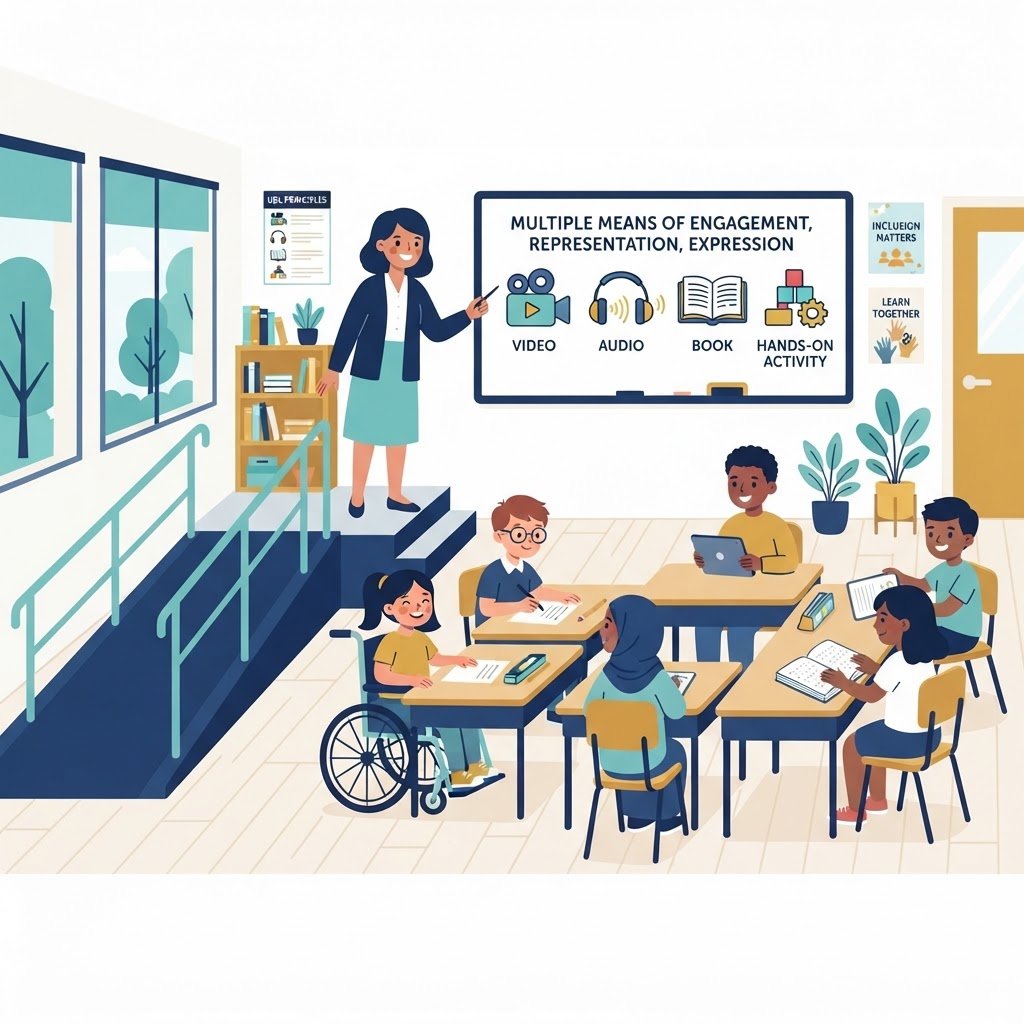
5. Provide Multiple Means of Action & Expression
5.1 First, allow students to express their learning through different formats (for example, essays, presentations, videos, art, digital projects).
5.2 In addition, offer adaptive tools, such as voice-to-text and alternative keyboards, for students with disabilities.
5.3 Then provide formative assessments (quizzes, reflections, peer reviews) to track progress.
5.4 Encourage students to set goals and reflect on their learning. As a result, students own both the pace and the proof of their growth.
Action and Expression in a Real Lesson
Pick one outcome from the week, then let students choose the format that proves it. For example, a Windows security lesson can end with a written guide, a narrated screencast or a live demo. In addition, allow the format choice to change once, because confidence often grows as the deadline nears. As a result, action and expression stop being a grading burden and become evidence of real learning.
Rubrics keep the freedom fair. For example, publish one rubric row for accuracy and another for clarity, so every format is judged on the same evidence. In addition, cap the choice at two formats per term, because endless choice slows students down. As a result, action and expression stay rigorous.
External Resources
In conclusion, flexible expression turns assessment into evidence of learning rather than a test of writing speed. Then, share exemplars of each format so every option feels equally serious.